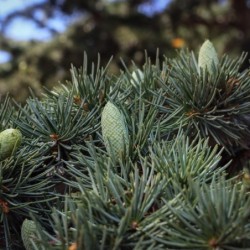
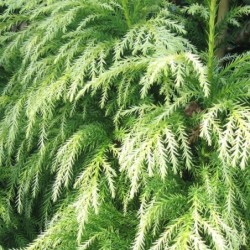
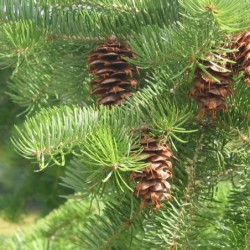
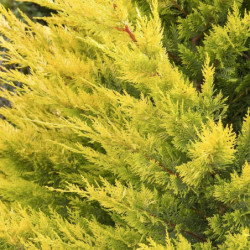
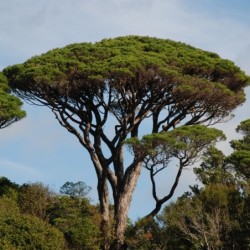
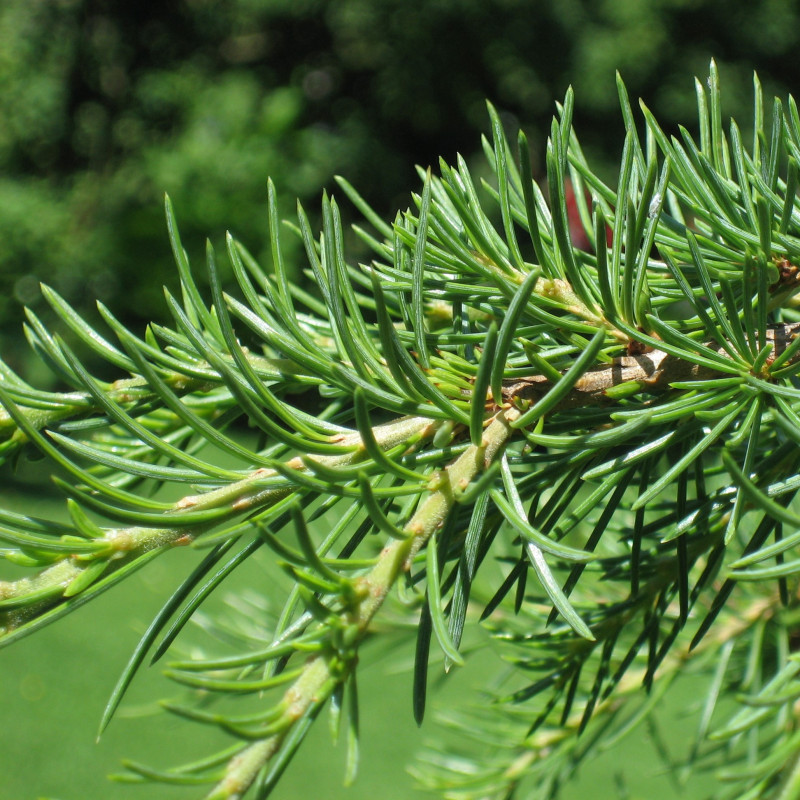
Cedrus libani, commonly known as cedar of Lebanon, Lebanon cedar, or Lebanese cedar, is a species of large evergreen conifer in the genus Cedrus, which belongs to the pine family and is native to the mountains of the Eastern Mediterranean basin. Known for its longevity, height, and durable wood, it has held profound significance for millennia. The tree features in ancient Mesopotamian literature. It is the national emblem of Lebanon and is widely used as an ornamental tree in parks and gardens. Historically the ancient Phoenicians used Cedar wood for shipbuilding and traded Cedar trees with Ancient Egypt, Ancient Greece, Anatolians, Iberians, Punics, Sicilians, Romans and Ancient Iraq. Cedrus libani can reach 40 m (130 ft) in height, with a massive monopodial columnar trunk up to 2.5 m (8 ft 2 in) in diameter. The trunks of old, open-grown trees often fork into several large, erect branches. The rough and scaly bark is dark grey to blackish brown, and is run through by deep, horizontal fissures that peel in small chips. The first-order branches are ascending in young trees; they grow to a massive size and take on a horizontal, wide-spreading disposition. Second-order branches are dense and grow in a horizontal plane. The crown is conical when young, becoming broadly tabular with age with fairly level branches; trees growing in dense forests maintain more conical shape.

 Register here to access prices and place orders
 Buy now at